Archive of posts with category 'artificial-intelligence'
And as quickly as that, we’re at task 6 of our quest. Causal imitation learning is perhaps the most fanciful-sounding, but at it’s core it remains as simple a goal...
We’ve now come to one of the most vital aspects of this theory - how can we learn causal models? Learning models is often an exceptionally computationally intensive process, so...
At this point we’ve developed a good sense of the technical theory of causal reinforcement learning. This next section brings together many important ideas and generalises notions of data transfer...
In the previous blog post we discussed some theory of how to select optimal and possibly optimal interventions in a causal framework. For those interested in the decision science, this...
In the previous blog post we discussed the gorey details of generalised policy learning - the first task of CRL. We went into some very detailed mathematical description of dynamic...
In the previous blog post we developed some ideas and theory needed to discuss a causal approach to reinforcement learning. We formalised notions of multi-armed bandits (MABs), Markov Decision Processes...
In the previous blog post we discussed and motivated the need for a causal approach to reinforcement learning. We argued that reinforcement learning naturally falls on the interventional rung of...
As part of any honours degree at the University of Cape Town, one is obliged to write a thesis droning on about some topic. Luckily for me, applied mathematics can...
In the last dicussion we sought to rigorously define counterfactual statements and distributions in terms of our DAG formalism of causal inference. This appeared fruitful but the theory is certainly...
In our last discussion we discussed the so-called ‘rung two’ of the ladder of causation, discussing interventions and randomisation in control trials. This is an incredibly important field in the...
Last time we discussed how we can learn causal structure from data and thought about how this relates to machine learning. Specifically, we noticed that having more data in a...
Last time we briefly discussed the theory needed to start thinking about how we can learn, in the statistical sense, causal information from ‘dumb’ data. Some key points were that...
In the last episode we developed the first tools we need to develop the theory needed to formalise interventions and counterfactual reasoning. In this article we’ll discuss how we can...
Last time we discussed and motivated the need for a modern theory of causal inference. We developed some of the basic principles necessary to develop this theory, but we have...
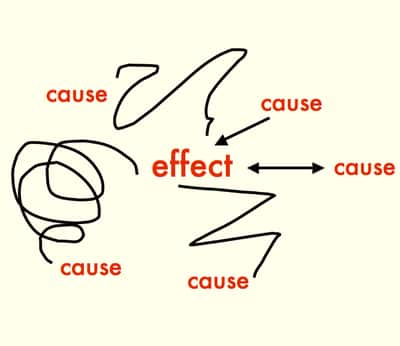
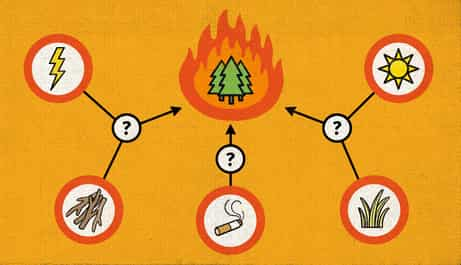
What’s the first thing a statistician will say when you dare say the word cause? If you’ve ever taken a statistics class, I have little doubt it was the classic...
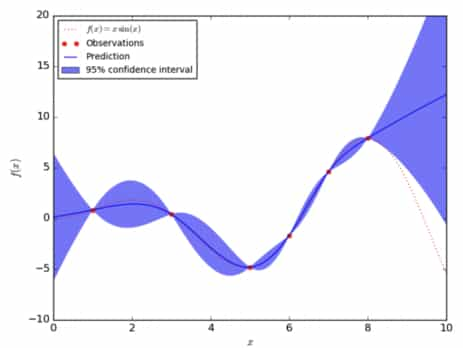
Perhaps we could use uncertainty estimation to detect where the model may be wrong and then correct for these potential errors without having to collect much more data. This uncertainty...
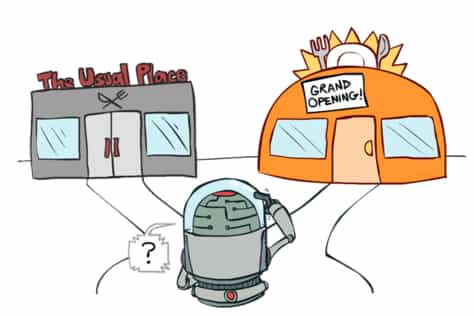
One of the inherent problems an agent faces in some arbitrary environment is how to decide whether to explore and discover more of the world around it, or to rather...
The active inference framework proposes agents act to maximise the evidence for a biased generative model, whereas in reinforcement learning the agent seeks to maximise the expected discounted cumulative reward....
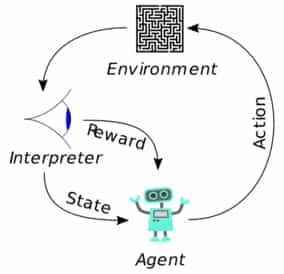
But what is reinforcement learning? The field of reinforcement learning is at the crossroads between optimal control, animal psychology, artificial intelligence and game theory and has seen a surge of...
Where we are Up to this point we have discussed methods primarily relying on the learning of value functions, usually approximating these with some neural network. That is, our focus...
The World Models (Ha et al., 2018) paper presented at NIPS in 2018 exploits the idea of having an agent train entirely within its latent representation of the world it...
Model-free reinforcement learning algorithms are a class of algorithms which do not use the transition probability information to train and make decisions. In a sense, they are a class of...